Jumat, 31 Desember 2010

For HIST 3805 students -- the Middle East and US policy at New Year 2011

Two informed summaries.

From the Economist, America and the Middle East:

Several reasons lie behind America’s loss of potency. Some reflect changes within the Middle East. Allies such as Israel and Turkey long followed American wishes reflexively because they felt imperilled and dependent on American largesse. They have now grown too strong for that. With its thriving economy, Israel feels able to take a more independent line. Turkey has also become an economic power and its government, unlike the dictatorships elsewhere in the Middle East, is now democratic. And although the region’s two strongest states still pursue policies that dovetail with America’s, they have grown unhelpfully estranged from each other.

Other allies that once augmented American power by proxy have grown too weak to help. Oil-rich Saudi Arabia packs financial clout, but its ruling princes are ageing and absorbed by a struggle for succession. Egypt, the most populous and diplomatically agile Arab country, is also run by old men. Once they could rally Arabs behind American objectives, but the Egyptians have struggled lately even to get the two main Palestinian factions, Hamas and Fatah, to talk to each other. The Mubaraks and the Al Sauds have little impact any more on the Arab Street: “resistance” and defiance carry more appeal. “The sense of how weak we are is a factor of how weak our partners are,” says Scott Carpenter, a Bush-administration official now with the Washington Institute for Near East Policy.
 Fingers burned
America’s own mistakes, tactical and strategic, have speeded its decline. The failure to find banned weapons in Saddam’s Iraq and the torture at Guantánamo and Abu Ghraib have tainted America’s moral authority. The application of American firepower has, ironically, also raised the bar for defying America’s will. Iran and its allies, including Syria, Hamas and Hizbullah, the Lebanese Shia party-cum-militia, feel they can call America’s bluff because they think that, having burned its fingers in Iraq and Afghanistan, it will no longer back harsh words with invasions.
You can see how they might reach that judgment. Aside from nearly 6,000 American fatalities in Iraq and Afghanistan, the expenditure, so far, of more than $1.1 trillion on military operations in those theatres has sapped the will for more campaigns. The cost of keeping a single soldier on the ground now exceeds $500,000 a year—a strong reason for a poorer America to reduce its presence in the region.

The incoming, Tea-Party-infused Congress is likely to make things harder. Whereas rivalry between Democrats and Republicans used to end at the water’s edge, it now extends into foreign policy. Despite the ratification of the New START treaty at the end of 2010, Congress is beset by partisanship, even in petty matters. Solely because of partisan obstruction, Mr Obama has yet to secure approval for his choice of two career diplomats as ambassadors to Turkey and Syria.

America’s pro-Israel lobby shows no sign of losing strength. Jonathan Broder, foreign-affairs editor of the Congressional Quarterly, discerns an effort by Republicans to woo Jewish voters, long more supportive of Democrats, by outbidding the administration over Israel. Eric Cantor, the incoming House majority leader, has proposed moving the $3 billion annual military grant to Israel from the foreign-aid budget to the Pentagon, in effect shielding it from spending cuts. “Not only would this remove a lever for American pressure,” warns Mr Broder, “it would make us silent accomplices in the settlement process.”

However, other Washington observers lament that the lessons of failure in the Middle East have yet to be learned. “Obama said that we had not only to change the war in Iraq, but to change the mindset that led to the war, and this has not happened,” says Brian Katulis of the Centre for American Progress, a left-leaning Washington think-tank. Despite a view that soft power can be as potent as military muscle, he says, this has not translated into policy. Marc Lynch, of George Washington University, agrees: “The lesson we seem to have learned from Iraq is not, ‘Disaster, don’t do it again’, but rather, ‘Now we know how to do counterinsurgency.’”

Issander el-Amrani at the National (United Arab Emirates):


Yet, even so, there is no easy alternative to America's Middle Eastern dominion. As frustrated as they are with American policies, the WikiLeaks cables also show that the region's leaders ultimately depend on US leadership. No regional actor has the capacity to single-handedly shape the region, and despite a decline in its credibility and influence, Washington remains the indispensable actor. The question is now about its ability to deliver. The "new Middle East" that Barack Obama inherited from his predecessor has yet to take shape - its centre is congealed but not yet set - but increasingly appears to be directionless.

Washington's friends and enemies, therefore, look attentively for signals from an Obama administration midway through its first term, with enthusiasm about a less belligerent America having given way to worries about its dwindling influence. Major regional diplomatic powers that rely on their inclusion in American initiatives - Egypt's monopoly on talks with Hamas is the most flagrant example of this - worry that their own credibility will suffer from US setbacks. Gulf states that have effectively subcontracted their security to the US worry both about the risks of a regional confrontation with Iran and the weakened value of this external security guarantee. Iran, mired in domestic troubles, seeks regional prestige as Washington's challenger but its unnecessarily belligerent rhetoric reduces its margin of manoeuvre to honourably avoid a confrontation that could devastate it. Syria, disappointed by a lukewarm overture from the Obama administration as it tries to "flip" it away from Iran, plays hard to get, stretched in all directions by its multiple overlapping alliances.
 Not unlike longtime junkies, the region's actors have developed a habit - an expectation that someone else will do the dirty work of managing a fractured Middle East, so they won't have to. After the heroin hit of Bush's creative destruction, they must do with the methadone of Obama. But they are still addicted to America.

Kamis, 30 Desember 2010

Mongol: The Rise of Genghis Khan (2007)

Every culture has its historical moments that matter a great deal to its members. The moments can be mythological: in the English-speaking world, millions care about the legend of Robin Hood and whether it reflects a historical reality.  It is hard to go broke making a movie about Robin Hood.

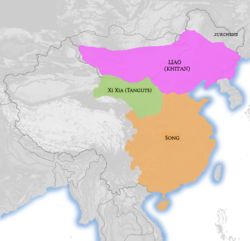
If the fall of the Tangut kingdom is your emotionally resonant moment in history, this is the movie for you.  A combination of Russians, Mongolians, Kazhaks,  and Germans have invested a lot of money and talent on the intuition that there are millions of moviegoers just like you.

Just in case you have never heard of the Tangut kingdom, this destruction, if you believe the movie, was the turning point in the early life of Genghis Khan. Its destruction begins and ends the movie; in between there is a rather curious account of the early years of the great conqueror, when he is repeatedly betrayed, defeated, robbed of all his meager wealth, and enslaved. The only positive elements in the story are his relationship with his wife, and his relationship with a blood brother who is not always on his side.  Oh, he is also faithful to the Mongol code, which other people give lip service to but ditch whenever it is convenient. Thus Temugin's (Genghis' ) rough early years. He plays by the rules, everybody else cheats. But don't worry, he will undoubtedly return in a later movie (if financing is available) to teach the Mongols law.  In the meantime, he looks soulful, and does not send away his wife, whom he chose when he was nine, even though there is a reasonable doubt about the paternity of her son. (She was kidnapped by his enemies and who knows what happened then.)

A whole bunch of cultural buttons are being pushed here, but if you're not a Central Asian it's not exactly clear what they are.

This may come across as a negative review, but actually it is a well made movie. It's just not Robin Hood.   For the non-Central Asians among us, the most remarkable feature of the film may be the vast landscapes which fill the screen for the entire two hours.

 Images:  top, Temugin, played by the big Japanese star Tadanobu Asano;  bottom, the Tangut kingdom (Western Xia), shown in green.

Selasa, 28 Desember 2010

Actually cutting and pasting

Grad student Tanya Roth, no stranger to the tools of the computer age, sometimes takes out the scissors and starts hacking away:

My grad school colleagues know me as someone who uses a number of digital processes for the dissertation project. ...

Maybe that’s why my advisor seemed surprised when I told her about my other hacking process…the literal cut-and-paste process I use when I’m editing chapters. This is the part where I hack the printed pages into pieces... I fell into this practice as a college freshman when I took my school’s comp 101 class. Back then, it was just a 10-page paper, but it worked. I cut the draft into paragraphs, numbered each, and wrote notes on the sides of each paragraph – sometimes editing sentences, but other times just noting what the theme of the paragraph was so I could rearrange content more effectively.

I did the same for my undergrad thesis, and the whole process has reemerged periodically during the dissertation stages. For all my digital processes, I can’t deny that this cutting and pasting works for me: it gives me the ability to visualize the whole piece a little better because I can see more than just one or two pages on the screen. I can try out what it will look like/sound like to rearrange paragraphs.

There's more, in this post and in others.

I like the idea of seeing the whole chapter laid out:


I don't know if it would work for me, but it might be worth a try.

Minggu, 26 Desember 2010

Excerpt from the Abstract: Outrance and Plaisance

Abstract: Outrance and Plaisance (an excerpt)

Will McLean “Outrance and Plaisance” in Journal of Medieval Military History 8 (2010): 155-170

Modern writers on medieval deeds of arms often use the term à outrance to describe combats fought “using the normal weapons of war” and à plaisance to describe combats using “specially modified weapons with sharp edges removed or blunted”.

However, during the 15th century, when the terms were most often used to describe contemporary deeds of arms, writers in Burgundy, France, Spain and England used the terms very differently. Sharp weapons of war and blunt weapons could be used in both sorts of combat. Instead, arms à outrance were distinguished by the willingness of the champions to fight until one side or the other was captured or killed, unless the judge or judges stopped the fight. This could happen either in the context of a judicial duel or a high stakes combat by mutual consent.

Arms à plaisance were less extreme, and would typically end as soon as an agreed number of blows were struck, or as soon as a combatant was carried to the ground.

The author quotes contemporary accounts of the extraordinary combats that 15th century writers described as à outrance. They show what happened in the rare cases when they were fought to the finish, as well as the less uncommon fights that were halted or proposed but not accepted. He also quotes 15th century accounts of a more limited combat à plaisance that was nonetheless fought with sharp weapons.

Combats à outrance were extraordinary events and their potential to end in legalized homicide presented the judges with a dilemma. Their response gives a measure of how extraordinary these combats were. In deciding whether and how far to allow deeds of arms to proceed under their control, rulers struck a delicate balance among competing goals: displaying their own power, fairness and authority, gratifying noble subjects, entertaining the populace and maintaining good order in their realm.
The complete abstract is here.

Image:  some are still at it.

Sabtu, 25 Desember 2010

Christmas in Egypt (not exactly "Christmas in Killarney")

  Juan Cole has the story:
Some 500,000 Christmas trees were sold this year in Egypt, an extremely mysterious statistic. The country’s Orthodox Coptic Church celebrates Christmas on January 7, considers the day distinctly less important than Easter, and does not have a tradition of Christmas trees or Santa Claus. The roughly 8 million Copts are the largest national community of Christians in the Middle East. Admittedly, there are 200,000 uniate Catholics who follow the Pope in Rome but retain their Coptic liturgy (Coptic is a late, Christian-influenced form of the old Pharaonic language of Egypt). But 200,000 is only some 40,000 families or so.


So who is buying the other 460,000 Christmas trees? Well, some are going into the country’s malls (there are now lots of malls, some of them just enormous. I was in the 5-block-long City Stars Mall in Nasr City, Cairo last May, and I swear I got lost. The modern malls put up banners saying Merry Christmas and Happy New Year for their mostly Muslim clientele! And there are a lot of resident Western expatriates in the country working for NGOs, who would buy Christmas trees (last I knew there were 17,000 contractors for US AID). And there are Christian refugees from southern Sudan (about 1 million Sudanese refugees altogether, though the Christians must be a small proportion of them).

Perhaps middle class Copts are going in for the trees in greater numbers. But the Egyptian Muslim middle and upper classes have begun celebrating Christmas, which must account for most of the rest of the Christmas trees. Mohammad El Meshed writes that Osama Abdelshafy told him, ‘ “I have been invited to at least four Christmas parties this year, and three of them are being held by Muslims. This is the first time I’ve felt such a huge emphasis on Christmas.” The Egyptian Muslim middle classes are having Christmas parties and giving gifts.

One of the things Westerners who have only swiftly gone through Egypt as tourists will not appreciate is that Egyptians have the best sense of humor in the Middle East and they love throwing parties.

True, the conservative Muslim clerics advise against commemorating Christmas, and it sends the radicals ballistic for Muslims to do so, but while many Egyptians are pious, they don’t seem to let the puritans get in the way of a good time. And, the radicals were largely repressed and defeated in the Nile Valley by the secular Egyptian state.

More here!