Tampilkan postingan dengan label historiography. Tampilkan semua postingan

Sabtu, 26 November 2016

Objectivity and the teaching historian

Andrew Holt of Florida State College at Jacksonville recently asked some medieval historians (he is one himself) to comment on the possiblity of "objectivity" in the teaching of history. I was one of them. Here are the answers he received.
Objectivity and and the classroom: ten historians respond.
There are no big surprises, but the similarity of views here might be of interest to non-academic readers.

Jumat, 20 November 2015

Who reads this stuff?

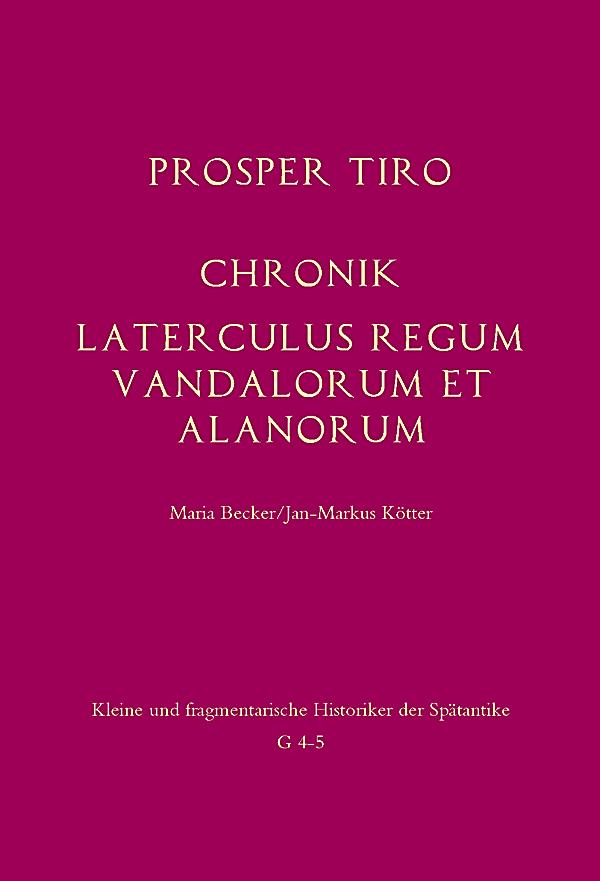
Back in the mid-1980s, I spun an article off my dissertation, The Fifth-century Chroniclers. The article was entitled "Prosper's Epitoma Chronicon: Was There An Edition of 443?" and was a brief discussion about...whether the 5th-century chronicler Prosper wrote an edition in A.D. 443! (As you may have guessed!) It could be taken as a fine example of scholarly nit-pickery, but it was worth doing because close scrutiny of ancient and medieval sources is and has been one of the methods we reconstruct the distant past. I thought it might help some readers somewhere while assuring potential employers that I was still at work.
But how many such readers could there be?
Well, this week I got a note from the Academia.edu site telling me that a Russian scholar was interested in having a look at the old article. I brushed it off and sent it off to the site. She saw it and thanked me.
Two days later the site has recorded 27!!!views. Good grief!
If any of you readers is really interested in the historiography of the Later Roman Empire and the origins of the medieval Latin chronicle tradition, the book version of The Fifth-century Chroniclers is still in print.
But if you are just vaguely curious about the answer to the question in the article's title: I said, probably not.
Image below: Somebody else's book on Prosper.


Minggu, 31 Mei 2015

Guy Halsall: think with history, act in the present.

Guy Halsall sings, "You better free your mind instead!"

The point is this: HfB [Historians for Britain] and its opponents share exactly the same, entirely conventional approach to the ‘relevance’ of history to current political debate; in other words, to ‘why history matters’. That relevance, as is clear from any close reading of almost all of the contributions to the exchange, consists entirely in the deployment of historical ‘fact’. I find this, to be blunt, more than a tad wearisome. [The involvement of historians in the referendum on Scottish separatism took exactly the same tedious form.] What seems largely to be at stake is who can assemble the biggest pile of facts. This is not going to make much of a difference, let alone decisively carry the day, either way. By way of demonstration, and if you can bear it, just read ‘below the line’ on the on-line version of the ‘Fog in the Channel…’ piece. To quote the (in my estimation) criminally underrated Andrew Roachford, ‘I don’t want to argue over who is wrong and who is right’.

Let me row back from the extreme position that might be inherent in that statement. First, it is very important to deploy historical fact to counter misleading public presentations of what ‘history shows us’. This was another reason I signed up to the ‘Fog in the Channel…’ letter. There were some seriously dubious elements in Abulafia’s piece ... However, as I have said too many times to count, history (as opposed to chronicling or antiquarianism) is the process of thinking, interpretation, explanation and critique, carried out on the basis of those facts, it does not stop at the latter's simple accumulation (most historical 'facts' are, to me, not especially interesting in and of themselves: this happened; that did not happen – factual accuracy is a duty not a virtue).

More seriously, both sides essentially see the course of history (as established by these facts) as providing a set of tramlines governing the proper path we should take in future. This removes any kind of emancipatory potential from the study of history. Put another way, and to restate the counter-factual posited earlier, suppose you agreed with Abulafia (and after all he’s not wrong about everything) that Britain’s history was, fundamentally, profoundly different from that of mainland Europe and had run a quite separate course (there is a case that could be put to support that contention that would have to be taken seriously, even if it is not the one put forward by HfB). But suppose that, unlike him, you thought that this had been a terrible thing and thought that Britain needed to incorporate itself more fully in Europe. Or suppose that you thought that the authors of ‘Fog in the Channel…’ were fundamentally right that Britain’s history was entirely entwined with that of the mainland but that you thought that this was wholly regrettable. In still other words, suppose that – like me – you thought that the course of the past had no force and provided no secure or reliable guide at all to what ought to be done in future.

So, what would one be able to contribute to a debate on these (or other) issues if one held a (superficially) seemingly nihilistic view, like mine, of history as random, chaotic, ironic, and unpredictable, and of the past as having no ability in and of itself to compel anyone to do anything? What, so to speak, would be the point of history? Why would it matter?

In his excellent blog-post – in my view, the best intervention in this discussion by some way (impressive not least for its concision) – Martial Staub draws attention to the discontinuities of history that subvert any attempt at a unified narrative or quest for origins. This seems to me to point us at a much more valuable and sophisticated means by which the study of history (rather than ‘History’ itself, that somehow mystic object, or objective force) can make a political contribution. Every dot that is later joined up to make a historical narrative represents a point of decision, of potential or, if you prefer, of freedom, where something quite different could have happened. To understand any of these decisions, as again I have said many times before, it is necessary to look at what people were trying to do, at what the options open to them were, or those they thought were open to them, what they knew – in short at all the things that didn’t happen, which frequently include the intended outcomes. You cannot simply explain them as steps on a pre-ordained path towards a later result, or as the natural outcomes of the preceding events. Any present moment of political decision represents the same thing: a point of choice, of decision, which requires serious thought. It should not be closed down by the idea that some 'burden of history' or other compels us to go one way rather than another. Those decision points that I just called the dots joined up to make a story were, at their time, points of freedom when any number of things were possible. The unpicking of narrative constructions makes this very clear and that – in my view – is the point that emerges from historical study.

This lesson, for want of a better word (I mistrust ‘lessons from history’), points at a string of possible subversions. Staub points out the subversion of the ‘national’ story but at the same time it subverts any similar ‘European’ master narrative. Britain can be said to have had a history different from that of other European countries – true enough - but to no greater extent than any other region of Europe has a history different from the others. It may be true that at some points British history seemed to run on a course that bucked European trends, but exactly the same can be said of, for example, Italian or Spanish history at various points. What is Europe anyway? Is it any more natural a unit of analysis than any other? In the Roman period, the idea of thinking of the north of Africa as somehow a different area from the northern shore of the Mediterranean would be very odd. Indeed the Mediterranean basin can be seen as a unified area of historical analysis (who, after all, knows that better than David Abulafia?), rather than as different continents divided by a sea – perhaps one with different histories from northern Europe or the North Sea cultural zone (which obviously includes Britain). All of these points also contribute to a historical critique and dismantling of the idea of the nation (any nation) itself, not simply the national story (see also here). All historical narratives are constructs so (unless one is based upon the misuse or fabrication of evidence, or not staying true to the basic 'facts' of what did or did not happen) one cannot be claimed to be more accurate than another. No one can win an argument on that basis. The best that can happen (and it is important) is the demonstration that there is more than one story to be told.

Above all, what I find to be one of the most important contributions that historical study can make, in terms of social/political engagement, is the subversion of all reifications, of all attempts to render contingent categorisations as natural. And of course it similarly subverts claims to represent contingent oppositions as eternal or natural.

All these subversions arise from what I have repeatedly argued on this blog are historical study’s most important benefits: the critique of what one is presented with, as evidence, and the simultaneous requirement to see similarity – shared human experience – in difference and diversity, or to listen to and understand that evidence).

So I would contend that the view of history sketched above is very much not a disabling, nihilistic one but quite the opposite. The careful, sympathetic yet critical investigation of the traces of the past, the deconstruction of narrative, nation and so on, can and should free us from the burdens that people want to impose on us in the name of history. The appreciation of the once possible but now impossible potentials at the decision-points of the past can and should allow us to think twice about what people tell us are now impossibilities and open our minds to the potentials and possibilities of the present.

If you want a catchphrase, try this: think with history, act in the present.

Senin, 18 Mei 2015

Griping about the word medieval

This past week I was in Kalamazoo Michigan for the International Congress for Medieval Studies. It was the 50th such Congress at Western Michigan University, and a certain number of sessions were devoted to looking back over the past half-century or so.

Sure enough, some of those sessions (which I should point out were very good and interesting) included a lot of griping and grouching about the misuse and ambiguity of the word medieval. You would think that a bunch of scholars who by their very nature of their discipline are experts in the evolution of the meaning of words would by now have gotten over the fact that though it doesn’t make a lot of sense to call “the Middle Ages” by that term, and that coming up with a really good, chronological definition of those ages is impossible, we are stuck with the words medieval and Middle Ages anyway. But no, there is a lingering feeling that it should be possible to nail down these terms – Middle Ages, medieval – once and for all. Or ditch them. If all the experts agreed, everybody else would have to fall into line – right?

You know that’s not going to happen.

Scholars of the Middle Ages, like experts in any other field, feel they should be in control of the terminology that defines their work and gives them legitimacy. But the truth is that any important subject is contested between a whole bunch of different individuals and groups who have an interest in that field. A single word – medieval – is shattered into a variety of definitions, many of which are out of date – at least in the eyes of people working on the cutting edge of, say, “medieval studies.” Old assumptions and terms and generalizations which current practitioners have rejected hang on in popular and nonspecialist discussions.

This can be intensely irritating for people who know that certain phrases and analyses lost their cogency back in 1927 and want to talk about what their friends are doing in the field now. Nevertheless people whose business is words should really accept the fact that words like “medieval” have a number of popular meanings, and when one of them shows up in current discussion (when, for instance, a Game of Thrones shows up and is widely labelled as medieval, even though the world of Game of Thrones is not our earth at all), the fact can be dealt with a good-humored way. It certainly would reflect credit on any field where a good-humored approach was the norm.

David Parry made the most sensible remark of the entire week when he pointed out that an imprecise word like medieval has a lot of cultural value for people who make their living interpreting that era. Indeed there is a financial payoff being associated with it. As he said, “the word makes students registering for courses press the button on the screen that says ‘enroll.’ The phrase ‘early modern’ doesn’t have that effect. ”

Jumat, 24 April 2015

Antoine de la Sale, Jean de Saintré. My review of a new translation

From The Medieval Review

De la Sale, Antoine. Jean de Saintré: A Late Medieval Education in Love and Chivalry. Trans. Roberta L. Krueger and Jane H. M. Taylor. Philadelphia: University of Pennsylvania Press, 2014. Pp. 264. $59.95. ISBN: 978-0-8122-4586-8.

Reviewed by Steven Muhlberger

Nipissing University

stevem@nipissingu.ca

Translations are sometimes seen as a lesser form of scholarly endeavor. This is to my mind quite unfair. Medievalists should be among the first to acknowledge that we all bump up against our linguistic limitations and have to turn to translations for help. Translations allow us medievalists to decide, after mastering four or five languages, whether material in a sixth is going to be relevant to our research question. Of course without translations we would have no way of introducing our students to the evidence on which we build our historical reconstructions. The best translations are running commentaries on some historical subject, which provide far more than a literal representation of the original text. The best translators are expert guides to whole past cultures. Finally, translators are literary artists who (in perhaps their most contentious role) create a modern analog of a premodern aesthetic experience.

Jean de Saintré (1456) has long attracted the attention of scholars and ordinary readers. It survives in ten manuscripts and numerous printed editions starting in 1517. Indeed there have been two previous English translations, the most recent being from 1965. Non-specialist readers have been attracted by Jean de Saintré as a portrayal of the chivalric, courtly culture of the fifteenth century--what has been called an early historical novel. Scholars have found and continue to find the book as capturing an important moment in French literary history. Roberta L. Krueger and Jane H. M. Taylor have given this text a new and approachable form.

Jean de Saintré draws much of its value from the fact that it portrays chivalric and courtly culture from the inside. Its author, Antoine de la Sale, is himself a fascinating subject for scholarly investigation. The son of a Gascon mercenary, La Sale spent most of his long life as a courtier in the retinues of the houses of Anjou and Luxemburg, working most of that time as a preceptor or tutor for various young princes. His duties provided him with motivation to write. His three major works, of which Jean de Saintré is one, have a strong pedagogical component, combining moral instruction with discussion of chivalric customs and courtly manners and lighthearted storytelling.

La Sale combined these various elements into Jean de Saintré, which has been called the first historical novel. The eponymous hero was a real warrior of the fourteenth century but little of his actual career found itself into La Sale's book. Jean de Saintré the character is a young nobleman who over the course of the book advances from being a bashful and uncultivated youngster to being a perfect knight, expert in chivalric competition, courtly intercourse, and war. He owes his transformation to the patronage of an older woman, a rich widow whom the author calls the lady of Belles Cousines. This lady spots young Jean in court one day and decides to take him in hand. After teasing him unmercifully about his ignorance of love and his lack of a lover, she begins to train him up to be a knightly figure who attains such courtly grace that by his mid-teens he is wildly popular with all and sundry. Even kings feel privileged to associate with him.

His relationship with the lady of Belles Cousines is more complicated. To judge by her rather cool public interaction with Jean, her fellow courtiers might easily conclude that she of all the ladies is the least impressed with him. While others are full of praise for the wonderboy she has hardly a good word to say to or about him. But she meets him in secret to share pleasure and delight; and perhaps more importantly, she lavishly dresses and equips him and funds his training in chivalric combat. Parts of the book reads like a catalogue of luxuries that most nonfictional noblemen of La Sale's time could hardly hope to obtain. For the modern reader, these passages give an idea of the attractions of the royal court--clothing, weapons, horses as well as good company and good food. Not that this can be taken as reportage. Jean lives a dream-like existence and enjoys the best of everything and the approval of all the best people.

Young Jean, with the encouragement of his lady, matures into an impressive warrior. Much of the book is devoted to describing Jean's tremendous success in the lists and on the battlefield. This is the ultimate test of Jean's worth as a man and of the quality of the secret and intense love affair he enjoys. The lady of Belles Cousines is his silent partner, imperiously telling him when and whom he will fight, praying and weeping for him when he goes out to do her will.

Eventually, however, the partnership breaks down when after many years Jean arranges a deed of arms without consulting the lady. She takes tremendous offense at this and without a word of explanation withdraws to the country where she begins an affair with a rich abbot. The book ends with Jean following her to her rural retreat, where he finds out how the land lies. Unsurprisingly, the two lovers of the lady come to blows and Jean defeats the abbot, though not without difficulty. His revenge on the lady is more subtle; he traps her into betraying herself before the entire court as an unworthy lover.

Roberta L. Krueger and Jane H. M. Taylor have created in Jean de Saintré a work that has many valuable characteristics. First, the translation makes available a rich source for those interested in the culture of chivalry in the later Middle Ages. For me, the depiction of the role of the lady in the education and success of an aspiring knight was particularly interesting, a theme that gave me new material to think about, and one that might well be very useful in a number of different teaching situations.

Second, the translators' apparatus is effectively mustered. The introduction briefly and clearly covers the essential information; it should be understandable and accessible to all potential readers. There is a valuable glossary, and a good discussion of some of the choices the translators made, e.g. their very sensible decision not to translate heraldic terminology.

Third, the style of the translators is neither obviously modern nor obnoxiously archaic. They have not, in other words, produced a new set of barriers that readers must jump over.

Fourth, unlike some earlier translations, the entire text is translated, including two long catalogues, one of the heraldry borne by important families of France, another of families that supposedly accompanied Saintré to Prussia on crusade. These catalogues and other long passages devoted to description of the court, luxurious gifts exchanged between important courtiers, and blow-by-blow coverage of Saintré's deeds of arms, could be and sometimes have been abridged in earlier versions of the book; the result being, however, that what La Sale and his fifteenth-century readers thought was edifying and enjoyable is obscured.

It is too bad that the publishers have decided to charge the same price for the e-book as they do for the hardback. For years I have taught a seminar on the history of chivalry and this book is an obvious candidate for the reading list. At its current price, however, I would probably pass it by the next time I teach it.
Selasa, 17 Maret 2015

Scholarly editions and databases online


In the good old days of the early Internet, the appearance of a new site or resource often attracted a lot of attention. Now there are so many good resources that it’s quite easy for them to slip by without people who might really be interested finding out about them.


Here are three resources related to medieval military history and chivalry, one of my own particular interests. I am not surprised if you’ve missed them.

What looks like a brand-new one just caught my attention. It is a site devoted to the Spanish epic, the Song of the Cid (Cantar de mio Cid) Its purpose is to make the text more accessible in its original language.  Thus its primary users will be students of medieval Castilian who want to compare the readings of the chief manuscript with a “normalized” text, to a spoken version, to an English translation. There is a lot of useful information packed into the site, and it is really pretty to look at, too. One gripe: it is not so easy to find the English translation. There is a button that takes you straight to it, but that button is not labelled. I rather think that was people who come to the site will be using the English version, even if they are not the core audience for whom the site was built.

A similar site has been around for a while. It is the Online Froissart, which like the Cid site presents textual material in a variety of ways, with once again serious scholars being the core audience. The value of the site is underlined by the fact that the the best print edition Froissart’s over a century old and still unfinished. Looking at book prices for much less specialized and complicated scholarly works, one wonders whether the print edition will be finished and if anyone will be able to afford it on that happy day. The editors of the site have broken down one set of barriers to this key later medieval work.

And how about Armour in Art?  It describes itself thus:  “ArmourInArt.com is a searchable database of medieval art featuring armour. Items in the database range in date from 1100 to 1450 and are located throughout Europe. Content is varied - frescos, altars, stained glass, reliefs, etc - anything that is not an effigy/brass or manuscript is included.”

Why those latter two exclusions? Because, Mr. Bones, there related sites to cover that of the material. See the links just above.

Even yet, the Internet offers us some good serious content along with the kitty cats and the child stars who have aged so badly.