Tampilkan postingan dengan label language. Tampilkan semua postingan
Tampilkan postingan dengan label language. Tampilkan semua postingan
Minggu, 15 September 2013
Selasa, 21 Mei 2013
Beautiful place names in the northern seas
I was away from home for a while, and restricted to using mobile devices. I find it rather aggravating to write a blog post of any substantial nature using the mobiles. Back at home again, I can now conveniently share with you a great entry in a blog goes back to my early days of reading blogs, Strange Maps.

The maps show the very peculiar place names of the two island groups north of Scotland, Shetland and Orkney. Frank Jacobs, the maintainer and compiler of Strange Maps, says much of what anyone might say about these wonderful names, but he does not address something that I would like to know. How is it that all of these names seem to be English, even if it's a rather peculiar kind of English? When exactly did people in these islands stop speaking some Norse dialect and not only take up English but Anglicize the whole landscape? Of course you could say that the language language of the map is Scots, but then the same question applies with a very minor change in terminology. At what point in Shetland history did somebody look at that rather centrally located site and decide that it was now going to be called Pund of Grutin? If that doesn't mean a pound of something or other, it does a good job of faking it. And what, oh what, was it called before?
Kamis, 02 Mei 2013
The mysterious slash
Anne Curzan in the Chronicle of Higher Education:
Two weeks ago, one student brought up the word slash as an example of new slang, and it quickly became clear to me that many students are using slash in ways unfamiliar to me. In the classes since then, I have come to the students with follow-up questions about the new use of slash. Finally, a student asked, “Why are you so interested in this?” I answered, “Slang creates a lot of new nouns, verbs, adjectives, and adverbs. It isn’t that often that slang creates a new conjunction.”
Let me explain. Lots of us use the slash (/) in writing to capture two or more descriptions of the same thing, with a meaning something like “or,” “and,” or “and/or”—e.g., “my sister/best friend” or “request/require.” The slash typically separates two things that are the same part of speech or parallel grammatically; and we can say that slash out loud if needed: “my sister slash best friend.”
Now I wouldn’t write that phrase down that way, with the slash spelled out, but students tell me they now often do. A student kindly sent me some real examples from her Facebook chat (shared with her permission):
1. Does anyone care if my cousin comes and visits slash stays with us Friday night?
2. I have been asking everyone I know in the Chicago area if they’re going slash if they’d willing [sic] to let me tag along slash show me around because frankly I’d have no idea how to get around Chicago on my own....
If the story of slash ended there, with a perfectly logical semantic extension of slash from its more conventional use, I wouldn’t be writing about it here on Lingua Franca. But for at least a good number of students, the conjunctive use of slash has extended to link a second related thought or clause to the first with a meaning that is often not quite “and” or “and/or” or “as well as.” It means something more like “following up.” Here are some real examples from students:
7. I really love that hot dog place on Liberty Street. Slash can we go there tomorrow?
8. Has anyone seen my moccasins anywhere? Slash were they given to someone to wear home ever?
9. I’ll let you know though. Slash I don’t know when I’m going to be home tonight
10. so what’ve you been up to? slash should we be skyping?
11. finishing them right now. slash if i don’t finish them now they’ll be done in first hour tomorrow
The student who searched her Facebook chat records found instances of this use of slash as far back as 2010....
The innovative uses of slash don’t stop there either: some students are also using slash to introduce an afterthought that is also a topic shift, captured in this sample text from a student:
12. JUST SAW ALEX! Slash I just chubbed on oatmeal raisin cookies at north quad and i miss you
This innovative conjunction (or conjunctive adverb, depending on how you want to interpret it) occurs, students tell me, even more commonly in speech than in writing. And in writing, it is often getting written out as slash, even in electronically mediated communication, where one might expect the quicker punctuation mark (/) rather than the five-letter word slash.
Slash is clearly a word to watch. Slash I do mean word, not punctuation mark. The emergence of a new conjunction/conjunctive adverb (let alone one stemming from a punctuation mark) is like a rare-bird sighting in the world of linguistics: an innovation in the slang of young people embedding itself as a function word in the language. This use of slash is so commonplace for students in my class that they almost forgot to mention it as a new slang word this term. That young people have integrated innovative slash into their language while barely noticing its presence is all the more reason that conjunctive slash might have staying power.
Jumat, 09 Desember 2011
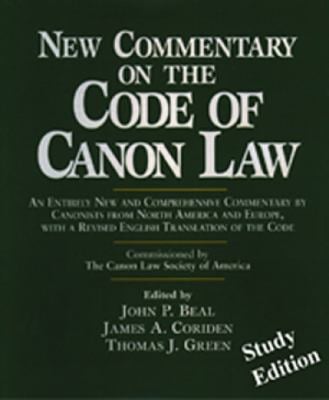
It's not cannon law, people

It's more like this...
Senin, 29 Agustus 2011
Qs and Ks and other ways of transliterating Arabic
The Arabist explains:
I was meeting with a bunch of business people who know no Arabic and little about the Middle East. The conversation turned to Libya and one of them turned to me and asked why there were so many spellings of Qadhafi's name. What follows is what I said, which is very much what Kal of TMND argues, except I put it in laymen's terms, without the phonetics.
Rabu, 22 Desember 2010
Iiiiiiiiiiiiiiiiiiiiiiiiiiiiiiit's (coming) BACK!
"Christ's endangered language," Aramaic. (It may be more accurate to say it's fighting a rearguard action at Oxford.)
More at the Guardian.
It is the language that Christ spoke, but is regarded as "endangered" with ever fewer scattered groups of native speakers.
But in Oxford, Aramaic has been flourishing again, with a course in the ancient language drawing people from as far afield as Liverpool and London. There are now 56 people learning Aramaic at the university, including three classics professors, solemnly completing their weekly homework tasks and regularly attending the free lunchtime lessons, more than the numbers studying Greek.
Their first lesson might have surprised the writers of the books of David and Ezra in the Bible, and of the Talmud, both originally written in Aramaic: the scholars pored over a transcription of Twinkle Twinkle Little Star.
David Taylor has previously taught the language to groups of two or three people in his study, and was astounded by the turnout for his first public lesson. Though a few fell by the wayside, more than 40 stayed the course until the classes ended in time for Christmas.
More at the Guardian.
Senin, 20 Desember 2010
Word
On speaking Klingon, or for that matter redoing A Christmas Carol in that language:
"Outsiders think it's weird," says Lawrence Schoen, founder and director of the K[lingon] L[anguage] I[nstitute]. "But it's no different than walking into a sports bar where everyone knows the score of the third game of the 1982 World Series."
Jumat, 26 November 2010
More good reading from Phil Paine: "identity," slavery, and genocide
The misuse of identity:
Similarly, this, from Chimamanda Adichie:
Update: Guy Halsall, anxious to elbow his way into this august company of great minds, recommends that anyone interested in this topic read his book Barbarian Migrations and the Roman West, 376 - 568, especially chapters 2 and 14; I would add that you might also want to be interested in barbarian migrations and "the fall of the Roman Empire." Seriously, though, I read Guy's book last month and it is quite fine, and the theme of multiple identities (as opposed to singular, essentialist ones) is surely there. This is not quite what Phil was talking about, but it is interesting and advances the historical debate on the "transformation" of Rome.
...I tend to get most on my high horse when I feel that some stupid or wicked notion is being smuggled into our subconscious by a turn of phrase or an implied definition.
This is exactly the case with the currently accepted use of the word identity. You see this word used all the time, and phrases like “identity politics” are assumed to have an easily recognizable meaning. I’ve just been reading a spate of archaeological papers which routinely refer to “identity” interchangeably with ethnicity. These papers, from a variety of academics, constantly repeat phrases like “negotiating their identity” — inane jargon which the field has borrowed from sociology, and which is now firmly entrenched. Archaeology is impoverished by this kind of rubbish, and drifts away from scientific rigour.
When someone casually refers to religious affiliation, or to ethnicity, or nationality, or gender, as being their “identity,” there is an implicit assumption that membership in large, formally defined or organized groups of people is the essential characteristic of an “identity.”
Now, I find this a profoundly wrong, and extremely offensive assumption. Your identity, as far as I’m concerned, and as I’ve believed throughout my life, is that which makes you uniquely yourself. My “identity” is composed of those things which refer to me and only me, experiences that occured to me alone, passions and ambitions that are mine, private symbols that only I understand, inner experiences that belong only to me. These unique, individual characteristics form, all together, my Identity. No characteristic that I share with some arbitrary group of other human beings, or that is demanded of me by some collective mush, or imposed on me by some proclaimed Authority, can constitute my identity. Certainly no group that I am merely associated with by accident of birth can ever be my identity. I find the idea that anyone would consider their identity to be, say, Norwegianess, or their skin colour, a profoundly disgusting notion. It is to abandon individuality entirely, to crush and erase identity, not to describe it.
This is a particularly creepy kind of creeping collectivism. The meaning of the word identity has been distorted, perverted, inverted. I don’t believe such things are random accidents. There are always powerful forces that seek to obliterate respect for, and recognition of, the individual human being. If you can pursuade people that their “identity” is nothing more than their membership in a collective blob, that there is nothing specifically notable or significant about themselves, then half the work of enslavement has been accomplished.Amartya Sen has made a similar point in a recent book Identity and Violence, but his point was that reducing people to a single group identity led not just to enslavement, but genocide.
Similarly, this, from Chimamanda Adichie:
Update: Guy Halsall, anxious to elbow his way into this august company of great minds, recommends that anyone interested in this topic read his book Barbarian Migrations and the Roman West, 376 - 568, especially chapters 2 and 14; I would add that you might also want to be interested in barbarian migrations and "the fall of the Roman Empire." Seriously, though, I read Guy's book last month and it is quite fine, and the theme of multiple identities (as opposed to singular, essentialist ones) is surely there. This is not quite what Phil was talking about, but it is interesting and advances the historical debate on the "transformation" of Rome.
Kamis, 11 November 2010
Does anyone know about the "Ehs" and the "You-Alls?"

Image: Some "Ehs" in Kandahar, some years back.
Selasa, 13 Juli 2010
A change worth noting?
This afternoon, I was comparing two historical groups and their political experience, and wrote down the phrase "brothers under the skin." Although I liked the way came off the tongue, the phrase made me uncomfortable. After all it rather implies that skin is pretty important and that you would expect differences in skin would reflect differences in a lot of other things. Otherwise the phrase "brothers under the skin" has no force.
Since that is no longer my default frame of reference, I got rid of the phrase.
Is there any old, even consecrated language that you are now unexpectedly uncomfortable with?
Since that is no longer my default frame of reference, I got rid of the phrase.
Is there any old, even consecrated language that you are now unexpectedly uncomfortable with?
Selasa, 29 Juni 2010
History of language: higher education can be fun
Stephen Chrisomalis is a fun and spirited guy, as I can attest from personal contact. Read this account of in-class research on the history of the word "chairperson" and see if you don't agree that it sounds like practically the Platonic ideal of an undergraduate course-meeting:
Last week I was running a very similar lecture to the one I always, on language and gender, where we talk about whether there are innate sex differences in language usage (not really), whether there are gender differences (yes, albeit highly context-dependent), blah blah blah. We talk about the myth that women talk more than men and get into some of the issues relating to social power. But that’s it. Even though it’s a topic a lot of students are interested in, I hadn’t ever come out of that session feeling as if we had learned anything in particular, or done anything out of the ordinary.
And then we found chairperson. It had ended up on the list of topics I was preparing on the subject, and when I showed the list to my class, they honed in on it right away. We actually started by investigating ‘chairman’, ‘chairwoman’, and ‘chair’, as well – all three are attested in the OED from the 17th century. ‘Chair’ as a title held by a person was surprisingly early (not just ‘he held the chair’ but ‘he was the chair’) at 1658. This alone, based on two minutes’ search of the OED, was worthwhile as a lesson to the students, because chair, too, has been the subject of some ideologically-charged metalanguage. I had thought that I might show them how we could examine the frequency of the various terms on a decade-by-decade basis. But chairperson, sitting there with its date of 1971, was far too tempting a target.
And so off we went on our lexical excursion. I didn’t expect much, maybe to find a few from the 60s, then move on with my demonstration of other techniques. The usual Googlery didn’t produce much of interest – not least because of the wacky metadata in Google Books and Google News Archive, producing thousands upon thousands of misdated records and more than one feisty embuggerance. (Oh, and PS, Google, when I search for chairperson do not show me results for chairman automatically.) I cursed once or twice at the Great God of Search, against my normal classroom practice (uhh … you can stop laughing now.) But Proquest, oh, sweet Proquest, how you came through for me. So instead of 1971, we have the following four early attestations:
1899 Washington Post Jul 15, pg. 6 “Indignant Womanhood”
“Madame Chairperson,” exclaimed the delegate, earnestly, “I feel the force of all that has been said concerning the necessity for us, the women of the nation, to nominate a clean candidate!”
Rabu, 23 Juni 2010
Speaking of early history...
...I have recently been introduced to Beachcombing's Bizarre History Blog: The outlandish, the anomalous and the curious from the last five thousand years.
It looks like it will be fun. If you're curious look at the latest post, World’s last Latin speakers in Africa?
Here is an excerpt:
It looks like it will be fun. If you're curious look at the latest post, World’s last Latin speakers in Africa?
Here is an excerpt:
Beachcombing guesses that the latest Latin speakers were those on the outskirts of the collapsing Empire, where there was the need to keep Latin ‘proper’, while these often bilingual invariably barbarian communities grasped onto their fading Roman identity as the world went soggy around them. As such the bilingual inscriptions of sixth- and seventh-century Wales (Irish-Latin) are interesting because the Latin there seems to show characteristics of a spoken language. And this at a date when the Romance languages were becoming increasingly unlatin-like.
For Beachcombing though an even more exciting reference appears in the work of Muhammad Al Idrisi in the mid twelfth century. Al Idrisi, an Andalusan Arab writer, wrote in A Diversion for the Man Longing to Travel to Far-Off Places – a work best known for carrying the earliest reference to Italian pasta – that the inhabitants of Gafsa in what is today Tunisia ‘are Berberised and the majority speak African Latin’. Could these have been the last Latin speakers in the world? It is a nice story, but Al Idrisi then gives the name of the town spring as tarmīd (a word still used today) that does not sound particularly Ciceronian…
Selasa, 25 Mei 2010
Caveat lector!

"Let the reader beware!"
Jonathon Jarrett over at A Corner of Tenth-Century Europe critiques a supposed breakthrough in our knowledge of the Pictish language. This excerpt explains why such a critique should be of interest to people who don't care much about Pictish, but might care about some other obscure, pre-modern historical problem:
Okay, here’s another thing I wanted to write up before I went to Kalamazoo. You may have seen, if you are following Archaeology in Europe as you all should be, that there was a recent paper in Proceedings of the Royal Society A that apparently decodes the Pictish language or something similar. I confess to initial scepticism, not least because they inexplicably persist in using the term `Iron Age’ for a people only attested under the name ‘Picts’ from the Roman period onwards, and whose glory days are most definitely early medieval, but I am interested in the Picts, I am in favour of Science! in history and so I thought I’d better have a look. After all, I am developing a blog-tradition of critiquing scientific papers on matters historical, and I’d hate to pass up another opportunity. Now, if those instances have taught me anything, it is these things:
1. articles based on the press release usually massively exaggerate the impact, and indeed the intent, of the actual research;
2. the actual research is usually more interested in proving a method than in its applications, otherwise it would have been published in a historical forum not a scientific one; and,
3. it is unfortunately rare for the authors of that research to have read enough in the field to which they’re supposedly contributing to have an accurate sense of whether or not they really are.
And this particular case ticks all three boxes, which is to say it’s interesting, appears scientifically rigorous at first glance, but sadly isn’t going to add much to the historical or linguistic debates, even though the news coverage would have you believe it’s a revolution in the field.
Like I said, let the reader beware.
One of the problems with work done by "scientists" in historical fields is that they tend to think that one simple procedure or test will cut through all the problems that have puzzled scholars for decades or centuries. But scientific evidence is usually as incomplete as any other kind.
Image: The Pictish symbols.
Langganan:
Postingan (Atom)
Weekly
-
This announcement speaks for itself: Dear Colleagues, After two decades teaching medieval art history and doing photography for my own use,...
-
From the Guardian: Leading foreign academics from the LSE acting as expert advisers to the UK government were told they would not be asked ...
-
A new translation of this fascinating treatise on horsemanship by a fifteenth-century king. This interview with Jeffrey Forgeng comes from...
-
Byron York talks to dedicated, long-time Romney supporters right after the concession speech: A few hours earlier, across the street at the...
-
 ...if you are very, very rich. (Most mss. of this age and quality are in national or university libraries and are not for sale at any price...
 -
Two experts in the Middle East have been more useful to me than most of the more prominent ones. They are Juan Cole and Joshua Landis. If yo...
-
I have always loved maps and history. Growing up in the USA in the early 60s, the Southeast Asian war gave me the opportunity to learn geog...
-
I just discovered this book, which came out a couple of years ago, thanks to Brad DeLong, who provided a link to a pre-print to chapter 9, ...
-
...full of archaeological goodies. Thanks, David Meadows! One of the nice things about this e-mail news compilation is that it supplies me ...
-
I have been reading the magazine Foreign Policy recently, and despite the fact that is understandably American-centric, it does tend to take...