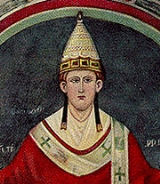
This sounds like a fantastic book. But then he's written them before.
Bartlett, Robert. Why Can the Dead Do Such Great Things? Saints and Worshippers from the Martyrs to the Reformation
Reviewed by Diane Fruchtman
DePauw University
dianefruchtman@depauw.edu
Robert Bartlett's Why Can the Dead Do Such Great Things? is delightful. Its acuity, readability, and impressive aggregation of fascinating details make it a compelling, useful, and thoroughly enjoyable read at any level of expertise. While the book is not without fault, its strengths as an avenue into the complex and multifaceted world of saints and worshippers in the Middle Ages far outweigh its shortcomings. Bartlett has a knack for selecting beautifully illustrative and compelling quotations from a wide range of primary sources to illuminate his points, allowing him to present, in glorious array, the diversity of the cult of saints. The book is a wonderful blend of judicious synthesis and confident command of detail, and its almost conversational progression of topics helps maintain and cultivate the reader's curiosity.
Bartlett offers his readers a chronological introduction to the cult of saints before branching out to a thematic exploration. Part one, "Developments," includes chapters on "Origins (100-500)," "The Early Middle Ages (500-1000)," "The High and Later Middle Ages (1000-1500)," and "The Protestant Reformation." While Bartlett occasionally uses primary sources uncritically (for instance, treating the whole of The Martyrdom of Polycarp as a contemporary account [2]), and while some of his chronological choices are curious (for instance, waiting until the second chapter to introduce Christian ambivalence about the power of the saints' bodily relics), in general these chapters provide an excellent diachronic overview of Western Christian saint veneration, one that lays a solid and necessary framework for the thematic chapters to come. The narrative Bartlett offers is familiar and succinct, yet filled with enough astute observations to make even a seasoned scholar pause and ponder. The chapter on the Reformation is rather too brief: Bartlett touches upon Luther, Zwingli, the Tudors, and Calvin just long enough to register these Reformers' varied rejections of the cult of saints, though not long enough to explore the underpinnings and manifestations of those rejections. Furthermore, the Catholic Reformation, to which the cult of the saints was essential and whose impact on saint veneration was substantial, is wholly absent from Bartlett's narrative. Nonetheless, this historical sketch is an excellent and compelling invitation into the medieval world of saints and worshippers; not only does it provide an accessible historical trajectory for the reader's reference, it piques the reader's interest and prompts questions for further study, many of which are addressed in later chapters.
The second (and far more substantial) section of the book (Part II: "Dynamics") is where Bartlett's brilliance most shines through, as he examines the cult of saints from many different angles, turning the jewel, so to speak, so that we can fully appreciate each facet. These ten chapters, covering topics as varied as liturgical calendars, literary effusions, pilgrim garb, and satirical skepticism, are so wide ranging and engaging that they warrant individual attention here.
"A saint was not a person of a particular type but a person who was treated in a particular way. That 'way' can be summed up by the word 'cult' and its three key elements were public recognition of the name and the day of the saint; special treatment of the saint's bodily remains; and celebrations of the saint in writing" (95). With these parameters, Bartlett (chapter 5: "The Nature of Cult") offers a conceptual foundation for how we can identify saints and their cults. Though sainthood remains in the eye of the beholder, historians and scholars can identify a cult by establishing that worshippers maintained a special relationship to the saint's name, body, and textual traditions. This chapter also assesses the purpose of cult--briefly stated, it is patronage, on a level slightly more accessible than dealing directly with God. The saints intercede on behalf of their petitioners, can be invoked by them, and are bound by the patron's rules of reciprocity, such that saints could be "shamed" or "humiliated" should their intervention seem in need of prodding.
Chapter 6, "Saints' Days," addresses the timing of saints' veneration and celebration. Bartlett describes the development of various liturgies for the saints (showing, in compelling detail, how murky and unsystematic this process often was); the hierarchy of feast days; how the celebration of saints' days varied by locality and thus served to carve out and reinforce local identities; and finally, how those holy days were publicized and celebrated in the lay calendar. This short chapter shows in microcosm the strengths of the book as a whole--attention to detail, illustrative examples, and an overarching dialogic tone that first illuminates what scholars "know" and then problematizes that body of knowledge by addressing questions the reader may not have considered, ultimately providing a cautious and nuanced overview of the topic. Similarly compelling is chapter 11, "Dedications and Naming." Once again, Bartlett sheds light on lesser-noted aspects of the cult of saints: the politics, logic, importance, consequences, and power of naming children after saints; the history of popes taking on saintly names as they ascend to office; the regional patterns of naming conventions, etc.
Chapters 7 and 8 tackle "Types of Saints" and "Relics and Shrines," respectively. Chapter 7 begins with the difficulties inherent in the historiographic project of counting saints--not least of which is the question of whom one should count. After describing the benefits and limitations of several models (delimiting by time, geography, canonization attempts, successful canonizations, etc.) and offering some insight into the data we think we have, Bartlett proceeds to discuss all of the various categories of saints he can muster, including Mary, angels, apostles and evangelists, martyrs, confessors (including doctors of the church, bishops, abbots, and hermits), virgins, Old Testament saints, lay saints, and royal saints (with a subsection on female royals). Then, acknowledging that any identity-based schema will fall short, Bartlett explores saints categorized by their roles as patrons of specific churches, cities, "nations," and individuals. The short sections allow the reader to peruse closely the examples that Bartlett offers, making the chapter, despite its length and encyclopedic potential, immensely readable--it is concise without being inane, wide ranging without ever becoming list-like. The "Relics and Shrines" chapter is, likewise, well structured and clear. It spans the various forms of relics (including body parts and contact relics), the logistics of shrines (their location and management), the collection of relics (in reliquaries and as objects of trade and theft), the movement of relics (in translation, procession, exchange, and theft), how relics appear in legal and military scenarios, and disputes about relics (both about their possession and about their validity).
One of the most satisfying chapters in this book, chapter 9 ("Miracles"), combines survey and analysis, incorporating medieval theories of the miraculous as well as scholarly debates about how to approach, quantify, and analyze the miracles we see in medieval sources. The chapter moves from theorizing and problematizing the miraculous to highlighting and exploring various categories of miracles, first by type (healing, provision, visions, prophecy) and then by context (war, against demons, among animals, in response to scoffers).
Less satisfying is chapter 10, on pilgrimage. While the chapter as a whole is replete with excellently chosen and illustrative quotes, an array of scholarly perspectives, and useful information, Bartlett's frame is perplexingly unhelpful. The chapter begins with a discussion of "Origins and Definitions," which opens with the following: "Unlike Judaism or Islam, Christianity did not originally have the idea of pilgrimage, that is, journeying to a holy place, a specially sanctioned spot with intrinsic spiritual significance like Jerusalem or Mecca" (410). Not only does this ill-judged preamble assume a clear historical separation between Judaism, Christianity, and Islam (such that we can accurately assess "original" practices, as if each tradition emerged neatly as a discrete and distinct entity), it employs a definition of pilgrimage that limits the phenomenon to the purely physical. At the end of the chapter, Bartlett mentions--almost as an aside--the idea that a human's whole life is a pilgrimage to God, but this idea is both early and ubiquitous in Christian thought, from New Testament injunctions that a Christian should live "as a stranger and a pilgrim" in the world (Heb 11:13; 1 Pet 2:11) to Augustine's repeated characterizations of life as pilgrimage. On the one hand, by circumscribing pilgrimage as physical, Bartlett has facilitated his description of what medieval pilgrimage to the shrines of the saints looked like, what it entailed, and how it was thought of; on the other hand, he has foreclosed exploration of the spirituality that lies at the heart of the Christian experience of pilgrimage and alienation more broadly. Nonetheless, the chapter does compass some excellent topics of focus, including the debates over the localization of sanctity in a tradition whose divinity is transcendent, the various accouterments of shrines and their visitors, and the nuts-and-bolts logistics of medieval pilgrimage.
Chapters 12 and 13, on "Images of the Saints" and "The Literature of Sanctity," once again represent Bartlett at his best. These vast topics are treated with attention to detail, superbly selected examples, and fair representations of current scholarship and historical debates alike, all suspended in a clear and helpful organizational framework. In chapter 12, Bartlett explores the rise of images in the cult of saints as "focused on devotion rather than just being mimetic or memorial" (472), and he gives a clear and sensitive overview of iconoclasm (both East and West) before discussing the manifestations of the iconophile victory in various media and contexts. Likewise, in chapter 13, Bartlett's treatment of the literature of sanctity explores the whys and wherefores of writing about saints (including a brief discussion of hagiography as both a genre and a source for historians of religious life) before addressing various manifestations in legendaries, miracle books, sermons, canonizations, and vernacular hagiography.
Confidence in the cult of saints, generally speaking, was a consistent feature of Christian life in the medieval Latin West. But in every generation there were objectors, Christians who felt that the cult of the saints was ridiculous, idolatrous, polytheistic, pointless, or simply distracting. This "Doubt and Dissent" forms the subject of chapter 14. Beginning with Vigilantius, Bartlett moves from early medieval dissenters to the "Western Heretics" (the Cathars, Waldensians, and Lollards), finally proceeding to address the more diffuse skepticism that pervaded medieval cultures: the "bubbling broth of mockery, disrespect, doubt, disbelief, disdain, and derision" that stood in contrast to the "serious and principled" objections of the "heretics" (596). Recorded in hagiographies (where these doubters were invariably overcome) and in satire (where true sanctity is inviolate and sham sanctity a comedy of errors), this "skepticism and scoffing" usually served to reinforce the cult of the saints, rather than to undermine it. Bartlett ends the chapter with a section on "policing the saints"--how the Church controlled the proliferation of veneration and in effect instituted its own internal and ultimately cult-preserving systematic doubt and dissent. This chapter is essential to the book, providing a much-needed counterbalance to the attitudes seen in other chapters. And its placement at the end, concentrating all naysayers in one final content chapter, serves well to highlight positions that, if dispersed among other topics, might have been overwhelmed. It leaves the reader with a strong sense that there is much more to be known and to be questioned than she has already encountered. On the other hand, the separation of "doubt and dissent" into its own chapter replicates the impression that these positions were marginal and worthy of exclusion from the general discussion of saint veneration, an impression only underscored by Bartlett's unqualified use of terms like "heretic" and "orthodox."
The only thoroughly disappointing chapter is the final one, "Reflections," which is preoccupied with the conceptual origins and transcultural touchstones of the cult of saints. Bartlett explores whether saint veneration was an extension of pagan devotion to the gods, an offshoot of nature-worship, a negotiation of ancient mortuary practice, a consequence of Abrahamic views about inhumation, and/or a cousin to ancestor veneration. In each case, Bartlett presents the possibilities alongside scholarship that has assessed them, and in each case unsurprisingly finds the cult of saints unique in some way, not entirely attributable to one or another theory of origination. The question is: why do these possibilities, so long and so clearly discredited and so reductive of the topic itself, need to be aired? They are certainly less illuminating than a phenomenological or theological analysis of saint veneration would be. Singularly problematic is the final section, "Comparisons and Conclusions." The evenhanded diplomacy, helpful documentation, and reader-focused progression of topics evidenced elsewhere in the book are all lacking here, and Bartlett's comparisons are facile and unhelpful. He makes unsubstantiated comparisons between martyrdom in Christianity, Islam, and Judaism, resorting, for example, to the historically incorrect commonplace that Christian martyrdom is "marked off" from "Muslim martyrdom by its almost exclusively passive character" (634); furthermore (and once again with no supporting citations), he asserts that "in their radical asceticism Christian saints are closer to the holy men of Hinduism and Buddhism than to those of Judaism or Islam" (634). Comparisons between and across traditions must not be grounded in superficial external similarities but in contextual study that respects the intricacies of each tradition in the appropriate historical moment. Without sufficient care, comparisons are at best academically useless and at worst politically irresponsible. It was disappointing to see such carelessness here, at the end of such a strong book.
Also disappointing is the absence of an answer to the title's query: Why can the dead do such great things? Intermittently throughout the text we catch possible glimpses of medieval reasoning regarding the theology, anthropology, and soteriology behind belief in the efficacy of saintly intercession, but the question is never an object of focus or direct discussion, despite the fact that, for medieval thinkers, it often was. Of course, it would be impossible to address all of the cultural and theological logics that made the cult of the saints intelligible to practitioners, but given Bartlett's elsewhere evident talent for presenting disputed ideas in a productive and illuminating way, the omission of this central topic, a key feature of medieval spirituality and the medieval logic of sainthood, is jarring. Bartlett's is not a history of theology, but a history of practice, overwhelmingly¬--the two must be considered in tandem to be fully understood.
Aside from these (perhaps parochial) disappointments, the book is both a fantastic resource and an enjoyable read. Despite its concatenation of sources and exempla, the book never feels list-like or tedious, and the author's skill in selecting topics, quotations, and references makes the reader more than usually inclined to use this as a jumping-off point for further exploration--a
quality that makes this work particularly well suited to casual readers seeking an exciting overview of the medieval cult of saints, upper-level undergraduates in classroom settings and exploring independent research projects, and academics interested in pursuing conversations across areas of specialty. Frankly, it is difficult to imagine a scholar who would not glean something new from reading this work
Bartlett, Robert. Why Can the Dead Do Such Great Things? Saints and Worshippers from the Martyrs to the Reformation
Reviewed by Diane Fruchtman
Robert Bartlett's Why Can the Dead Do Such Great Things? is delightful. Its acuity, readability, and impressive aggregation of fascinating details make it a compelling, useful, and thoroughly enjoyable read at any level of expertise. While the book is not without fault, its strengths as an avenue into the complex and multifaceted world of saints and worshippers in the Middle Ages far outweigh its shortcomings. Bartlett has a knack for selecting beautifully illustrative and compelling quotations from a wide range of primary sources to illuminate his points, allowing him to present, in glorious array, the diversity of the cult of saints. The book is a wonderful blend of judicious synthesis and confident command of detail, and its almost conversational progression of topics helps maintain and cultivate the reader's curiosity.
Bartlett offers his readers a chronological introduction to the cult of saints before branching out to a thematic exploration. Part one, "Developments," includes chapters on "Origins (100-500)," "The Early Middle Ages (500-1000)," "The High and Later Middle Ages (1000-1500)," and "The Protestant Reformation." While Bartlett occasionally uses primary sources uncritically (for instance, treating the whole of The Martyrdom of Polycarp as a contemporary account [2]), and while some of his chronological choices are curious (for instance, waiting until the second chapter to introduce Christian ambivalence about the power of the saints' bodily relics), in general these chapters provide an excellent diachronic overview of Western Christian saint veneration, one that lays a solid and necessary framework for the thematic chapters to come. The narrative Bartlett offers is familiar and succinct, yet filled with enough astute observations to make even a seasoned scholar pause and ponder. The chapter on the Reformation is rather too brief: Bartlett touches upon Luther, Zwingli, the Tudors, and Calvin just long enough to register these Reformers' varied rejections of the cult of saints, though not long enough to explore the underpinnings and manifestations of those rejections. Furthermore, the Catholic Reformation, to which the cult of the saints was essential and whose impact on saint veneration was substantial, is wholly absent from Bartlett's narrative. Nonetheless, this historical sketch is an excellent and compelling invitation into the medieval world of saints and worshippers; not only does it provide an accessible historical trajectory for the reader's reference, it piques the reader's interest and prompts questions for further study, many of which are addressed in later chapters.
The second (and far more substantial) section of the book (Part II: "Dynamics") is where Bartlett's brilliance most shines through, as he examines the cult of saints from many different angles, turning the jewel, so to speak, so that we can fully appreciate each facet. These ten chapters, covering topics as varied as liturgical calendars, literary effusions, pilgrim garb, and satirical skepticism, are so wide ranging and engaging that they warrant individual attention here.
"A saint was not a person of a particular type but a person who was treated in a particular way. That 'way' can be summed up by the word 'cult' and its three key elements were public recognition of the name and the day of the saint; special treatment of the saint's bodily remains; and celebrations of the saint in writing" (95). With these parameters, Bartlett (chapter 5: "The Nature of Cult") offers a conceptual foundation for how we can identify saints and their cults. Though sainthood remains in the eye of the beholder, historians and scholars can identify a cult by establishing that worshippers maintained a special relationship to the saint's name, body, and textual traditions. This chapter also assesses the purpose of cult--briefly stated, it is patronage, on a level slightly more accessible than dealing directly with God. The saints intercede on behalf of their petitioners, can be invoked by them, and are bound by the patron's rules of reciprocity, such that saints could be "shamed" or "humiliated" should their intervention seem in need of prodding.
Chapter 6, "Saints' Days," addresses the timing of saints' veneration and celebration. Bartlett describes the development of various liturgies for the saints (showing, in compelling detail, how murky and unsystematic this process often was); the hierarchy of feast days; how the celebration of saints' days varied by locality and thus served to carve out and reinforce local identities; and finally, how those holy days were publicized and celebrated in the lay calendar. This short chapter shows in microcosm the strengths of the book as a whole--attention to detail, illustrative examples, and an overarching dialogic tone that first illuminates what scholars "know" and then problematizes that body of knowledge by addressing questions the reader may not have considered, ultimately providing a cautious and nuanced overview of the topic. Similarly compelling is chapter 11, "Dedications and Naming." Once again, Bartlett sheds light on lesser-noted aspects of the cult of saints: the politics, logic, importance, consequences, and power of naming children after saints; the history of popes taking on saintly names as they ascend to office; the regional patterns of naming conventions, etc.
Chapters 7 and 8 tackle "Types of Saints" and "Relics and Shrines," respectively. Chapter 7 begins with the difficulties inherent in the historiographic project of counting saints--not least of which is the question of whom one should count. After describing the benefits and limitations of several models (delimiting by time, geography, canonization attempts, successful canonizations, etc.) and offering some insight into the data we think we have, Bartlett proceeds to discuss all of the various categories of saints he can muster, including Mary, angels, apostles and evangelists, martyrs, confessors (including doctors of the church, bishops, abbots, and hermits), virgins, Old Testament saints, lay saints, and royal saints (with a subsection on female royals). Then, acknowledging that any identity-based schema will fall short, Bartlett explores saints categorized by their roles as patrons of specific churches, cities, "nations," and individuals. The short sections allow the reader to peruse closely the examples that Bartlett offers, making the chapter, despite its length and encyclopedic potential, immensely readable--it is concise without being inane, wide ranging without ever becoming list-like. The "Relics and Shrines" chapter is, likewise, well structured and clear. It spans the various forms of relics (including body parts and contact relics), the logistics of shrines (their location and management), the collection of relics (in reliquaries and as objects of trade and theft), the movement of relics (in translation, procession, exchange, and theft), how relics appear in legal and military scenarios, and disputes about relics (both about their possession and about their validity).
One of the most satisfying chapters in this book, chapter 9 ("Miracles"), combines survey and analysis, incorporating medieval theories of the miraculous as well as scholarly debates about how to approach, quantify, and analyze the miracles we see in medieval sources. The chapter moves from theorizing and problematizing the miraculous to highlighting and exploring various categories of miracles, first by type (healing, provision, visions, prophecy) and then by context (war, against demons, among animals, in response to scoffers).
Less satisfying is chapter 10, on pilgrimage. While the chapter as a whole is replete with excellently chosen and illustrative quotes, an array of scholarly perspectives, and useful information, Bartlett's frame is perplexingly unhelpful. The chapter begins with a discussion of "Origins and Definitions," which opens with the following: "Unlike Judaism or Islam, Christianity did not originally have the idea of pilgrimage, that is, journeying to a holy place, a specially sanctioned spot with intrinsic spiritual significance like Jerusalem or Mecca" (410). Not only does this ill-judged preamble assume a clear historical separation between Judaism, Christianity, and Islam (such that we can accurately assess "original" practices, as if each tradition emerged neatly as a discrete and distinct entity), it employs a definition of pilgrimage that limits the phenomenon to the purely physical. At the end of the chapter, Bartlett mentions--almost as an aside--the idea that a human's whole life is a pilgrimage to God, but this idea is both early and ubiquitous in Christian thought, from New Testament injunctions that a Christian should live "as a stranger and a pilgrim" in the world (Heb 11:13; 1 Pet 2:11) to Augustine's repeated characterizations of life as pilgrimage. On the one hand, by circumscribing pilgrimage as physical, Bartlett has facilitated his description of what medieval pilgrimage to the shrines of the saints looked like, what it entailed, and how it was thought of; on the other hand, he has foreclosed exploration of the spirituality that lies at the heart of the Christian experience of pilgrimage and alienation more broadly. Nonetheless, the chapter does compass some excellent topics of focus, including the debates over the localization of sanctity in a tradition whose divinity is transcendent, the various accouterments of shrines and their visitors, and the nuts-and-bolts logistics of medieval pilgrimage.
Chapters 12 and 13, on "Images of the Saints" and "The Literature of Sanctity," once again represent Bartlett at his best. These vast topics are treated with attention to detail, superbly selected examples, and fair representations of current scholarship and historical debates alike, all suspended in a clear and helpful organizational framework. In chapter 12, Bartlett explores the rise of images in the cult of saints as "focused on devotion rather than just being mimetic or memorial" (472), and he gives a clear and sensitive overview of iconoclasm (both East and West) before discussing the manifestations of the iconophile victory in various media and contexts. Likewise, in chapter 13, Bartlett's treatment of the literature of sanctity explores the whys and wherefores of writing about saints (including a brief discussion of hagiography as both a genre and a source for historians of religious life) before addressing various manifestations in legendaries, miracle books, sermons, canonizations, and vernacular hagiography.
Confidence in the cult of saints, generally speaking, was a consistent feature of Christian life in the medieval Latin West. But in every generation there were objectors, Christians who felt that the cult of the saints was ridiculous, idolatrous, polytheistic, pointless, or simply distracting. This "Doubt and Dissent" forms the subject of chapter 14. Beginning with Vigilantius, Bartlett moves from early medieval dissenters to the "Western Heretics" (the Cathars, Waldensians, and Lollards), finally proceeding to address the more diffuse skepticism that pervaded medieval cultures: the "bubbling broth of mockery, disrespect, doubt, disbelief, disdain, and derision" that stood in contrast to the "serious and principled" objections of the "heretics" (596). Recorded in hagiographies (where these doubters were invariably overcome) and in satire (where true sanctity is inviolate and sham sanctity a comedy of errors), this "skepticism and scoffing" usually served to reinforce the cult of the saints, rather than to undermine it. Bartlett ends the chapter with a section on "policing the saints"--how the Church controlled the proliferation of veneration and in effect instituted its own internal and ultimately cult-preserving systematic doubt and dissent. This chapter is essential to the book, providing a much-needed counterbalance to the attitudes seen in other chapters. And its placement at the end, concentrating all naysayers in one final content chapter, serves well to highlight positions that, if dispersed among other topics, might have been overwhelmed. It leaves the reader with a strong sense that there is much more to be known and to be questioned than she has already encountered. On the other hand, the separation of "doubt and dissent" into its own chapter replicates the impression that these positions were marginal and worthy of exclusion from the general discussion of saint veneration, an impression only underscored by Bartlett's unqualified use of terms like "heretic" and "orthodox."
The only thoroughly disappointing chapter is the final one, "Reflections," which is preoccupied with the conceptual origins and transcultural touchstones of the cult of saints. Bartlett explores whether saint veneration was an extension of pagan devotion to the gods, an offshoot of nature-worship, a negotiation of ancient mortuary practice, a consequence of Abrahamic views about inhumation, and/or a cousin to ancestor veneration. In each case, Bartlett presents the possibilities alongside scholarship that has assessed them, and in each case unsurprisingly finds the cult of saints unique in some way, not entirely attributable to one or another theory of origination. The question is: why do these possibilities, so long and so clearly discredited and so reductive of the topic itself, need to be aired? They are certainly less illuminating than a phenomenological or theological analysis of saint veneration would be. Singularly problematic is the final section, "Comparisons and Conclusions." The evenhanded diplomacy, helpful documentation, and reader-focused progression of topics evidenced elsewhere in the book are all lacking here, and Bartlett's comparisons are facile and unhelpful. He makes unsubstantiated comparisons between martyrdom in Christianity, Islam, and Judaism, resorting, for example, to the historically incorrect commonplace that Christian martyrdom is "marked off" from "Muslim martyrdom by its almost exclusively passive character" (634); furthermore (and once again with no supporting citations), he asserts that "in their radical asceticism Christian saints are closer to the holy men of Hinduism and Buddhism than to those of Judaism or Islam" (634). Comparisons between and across traditions must not be grounded in superficial external similarities but in contextual study that respects the intricacies of each tradition in the appropriate historical moment. Without sufficient care, comparisons are at best academically useless and at worst politically irresponsible. It was disappointing to see such carelessness here, at the end of such a strong book.
Also disappointing is the absence of an answer to the title's query: Why can the dead do such great things? Intermittently throughout the text we catch possible glimpses of medieval reasoning regarding the theology, anthropology, and soteriology behind belief in the efficacy of saintly intercession, but the question is never an object of focus or direct discussion, despite the fact that, for medieval thinkers, it often was. Of course, it would be impossible to address all of the cultural and theological logics that made the cult of the saints intelligible to practitioners, but given Bartlett's elsewhere evident talent for presenting disputed ideas in a productive and illuminating way, the omission of this central topic, a key feature of medieval spirituality and the medieval logic of sainthood, is jarring. Bartlett's is not a history of theology, but a history of practice, overwhelmingly¬--the two must be considered in tandem to be fully understood.
Aside from these (perhaps parochial) disappointments, the book is both a fantastic resource and an enjoyable read. Despite its concatenation of sources and exempla, the book never feels list-like or tedious, and the author's skill in selecting topics, quotations, and references makes the reader more than usually inclined to use this as a jumping-off point for further exploration--a
quality that makes this work particularly well suited to casual readers seeking an exciting overview of the medieval cult of saints, upper-level undergraduates in classroom settings and exploring independent research projects, and academics interested in pursuing conversations across areas of specialty. Frankly, it is difficult to imagine a scholar who would not glean something new from reading this work