Tampilkan postingan dengan label monarchy. Tampilkan semua postingan

Jumat, 17 Maret 2017

The Guardian tells us what will happen when Queen Elizabeth dies

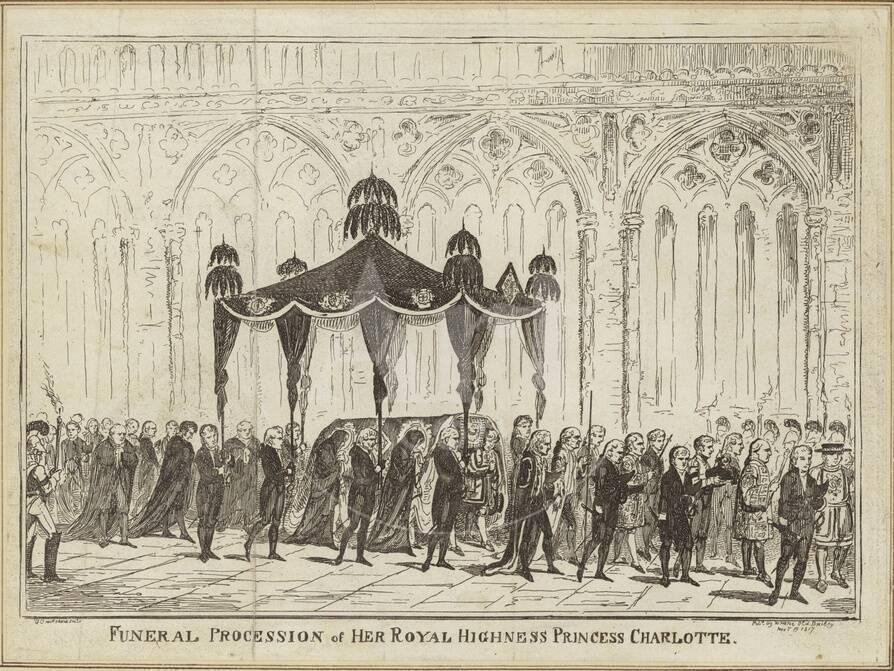
For a long time, the art of royal spectacle was for other, weaker peoples: Italians, Russians, and Habsburgs. British ritual occasions were a mess. At the funeral of Princess Charlotte, in 1817, the undertakers were drunk. Ten years later, St George’s Chapel was so cold during the burial of the Duke of York that George Canning, the foreign secretary, contracted rheumatic fever and the bishop of London died. “We never saw so motley, so rude, so ill-managed a body of persons,” reported the Times on the funeral of George IV, in 1830. Victoria’s coronation a few years later was nothing to write home about. The clergy got lost in the words; the singing was awful; and the royal jewellers made the coronation ring for the wrong finger. “Some nations have a gift for ceremonial,” the Marquess of Salisbury wrote in 1860. “In England the case is exactly the reverse.”

What we think of as the ancient rituals of the monarchy were mainly crafted in the late 19th century, towards the end of Victoria’s reign. Courtiers, politicians and constitutional theorists such as Walter Bagehot worried about the dismal sight of the Empress of India trooping around Windsor in her donkey cart. If the crown was going to give up its executive authority, it would have to inspire loyalty and awe by other means – and theatre was part of the answer. “The more democratic we get,” wrote Bagehot in 1867, “the more we shall get to like state and show.”

Obsessed by death, Victoria planned her own funeral with some style. But it was her son, Edward VII, who is largely responsible for reviving royal display. One courtier praised his “curious power of visualising a pageant”. He turned the state opening of parliament and military drills, like the Trooping of the Colour, into full fancy-dress occasions, and at his own passing, resurrected the medieval ritual of lying in state. Hundreds of thousands of subjects filed past his coffin in Westminster Hall in 1910, granting a new sense of intimacy to the body of the sovereign. By 1932, George V was a national father figure, giving the first royal Christmas speech to the nation – a tradition that persists today – in a radio address written for him by Rudyard Kipling.

The shambles and the remoteness of the 19th-century monarchy were replaced by an idealised family and historic pageantry invented in the 20th. In 1909, Kaiser Wilhelm II boasted about the quality of German martial processions: “The English cannot come up to us in this sort of thing.” Now we all know that no one else quite does it like the British.

The Queen, by all accounts a practical and unsentimental person, understands the theatrical power of the crown. “I have to be seen to be believed,” is said to be one of her catchphrases. And there is no reason to doubt that her funeral rites will evoke a rush of collective feeling. “I think there will be a huge and very genuine outpouring of deep emotion,” said Andrew Roberts, the historian. It will be all about her, and it will really be about us. There will be an urge to stand in the street, to see it with your own eyes, to be part of a multitude. The cumulative effect will be conservative. “I suspect the Queen’s death will intensify patriotic feelings,” one constitutional thinker told me, “and therefore fit the Brexit mood, if you like, and intensify the feeling that there is nothing to learn from foreigners.”

Minggu, 29 September 2013

Rant: digging up Richard III

It's not my rant but Howard Williams' of the University of Chester, referred to me by Guy Halsall.  Here is part of it:

Worshipping Dead RoyalsThe third objectionable aspect of the excavation of Richard III is the royal cult of personality that surrounded the excavation and the respect shown to his remains. I personally don’t have time for those that fawn over present-day living royals and their sprogs, but it seems somehow cut-rate and sordid to be fawning over long-dead royals in the hope of ‘rewriting the history books’ or getting to know their true person through their bodies. I can imagine the same sensitive facial reconstructions done for the butchers of the 20th century and imagine cult followers shedding tears over their sensitive small moustaches and their kind eyes.
Now I am sure Will, Kate and little baby George are all lovely. Even the Duke of Edinburgh makes me laugh. However, this royal necrophilia gets right up my archaeonose. Rather than the scientific study of human remains to understand life and death, this becomes a faux-forensic investigation into the individual’s life and death. Whether hero or villain, it is ironic that our obsession with the remains of the individual cadaver of Richard III flies in the face of the aspirations we have as a discipline for writing about the past in a social and humanising way.  Implicated in this view is that only rich and powerful people in the past matter today. In other words; the bones of toffs are venerated today as sacred, the bones of plebs are trowel fodder.
There is a strong case for Leicester cathedral to create a medieval equivalent to Westminster Abbey’s ‘tomb of the unknown soldier’. If you want to spend a million, select one of the many thousands of medieval graves we archaeologists have dug up – an old woman who died of leprosy, an infant who died in childbirth – and create a monument for them that makes us reflect on present-day poverty in the rest of the world and how many millions live in poverty today and die in agony from curable diseases. Don’t honour a warmongering royal, honour humanity.

Selasa, 15 November 2011

Minggu, 01 November 2009

Ah, the good old days of divine monarchy and mass murder!

From the New York Times, an article on happier days at Ur:

A new examination of skulls from the royal cemetery at Ur, discovered in Iraq almost a century ago, appears to support a more grisly interpretation than before of human sacrifices associated with elite burials in ancient Mesopotamia, archaeologists say.

Palace attendants, as part of royal mortuary ritual, were not dosed with poison to meet a rather serene death. Instead, a sharp instrument, a pike perhaps, was driven into their heads.

Archaeologists at the University of Pennsylvania reached that conclusion after conducting the first CT scans of two skulls from the 4,500-year-old cemetery. The cemetery, with 16 tombs grand in construction and rich in gold and jewels, was discovered in the 1920s. A sensation in 20th century archaeology, it revealed the splendor at the height of the Mesopotamian civilization.

The recovery of about 2,000 burials attested to the practice of human sacrifice on a large scale. At or even before the demise of a king or queen, members of the court — handmaidens, warriors and others — were put to death. Their bodies were usually arranged neatly, the women in elaborate headdress, the warriors with weapons at their side.

C. Leonard Woolley, the English archaeologist who directed the excavations, a collaboration between Penn and the British Museum, eventually decided that the attendants had been marched down into burial chambers, where they drank poison and lay down to die. That became the conventional story....

The researchers, led by Janet M. Monge, a physical anthropologist at Penn, applied forensic skills to arrive at the probable cause of death in both cases.

There were two round holes in the soldier’s cranium and one in the woman’s, each about an inch in diameter. But the most convincing evidence, Dr. Monge said in an interview, were cracks radiating from the holes. Only if the holes were made in a living person would they have produced such a pattern of fractures along stress lines. The more brittle bones of a person long dead would shatter like glass, she explained.

Dr. Monge surmised that the holes were made by a sharp instrument and that death “by blunt-force trauma was almost immediate.”...

But what did this "process" smell like?